
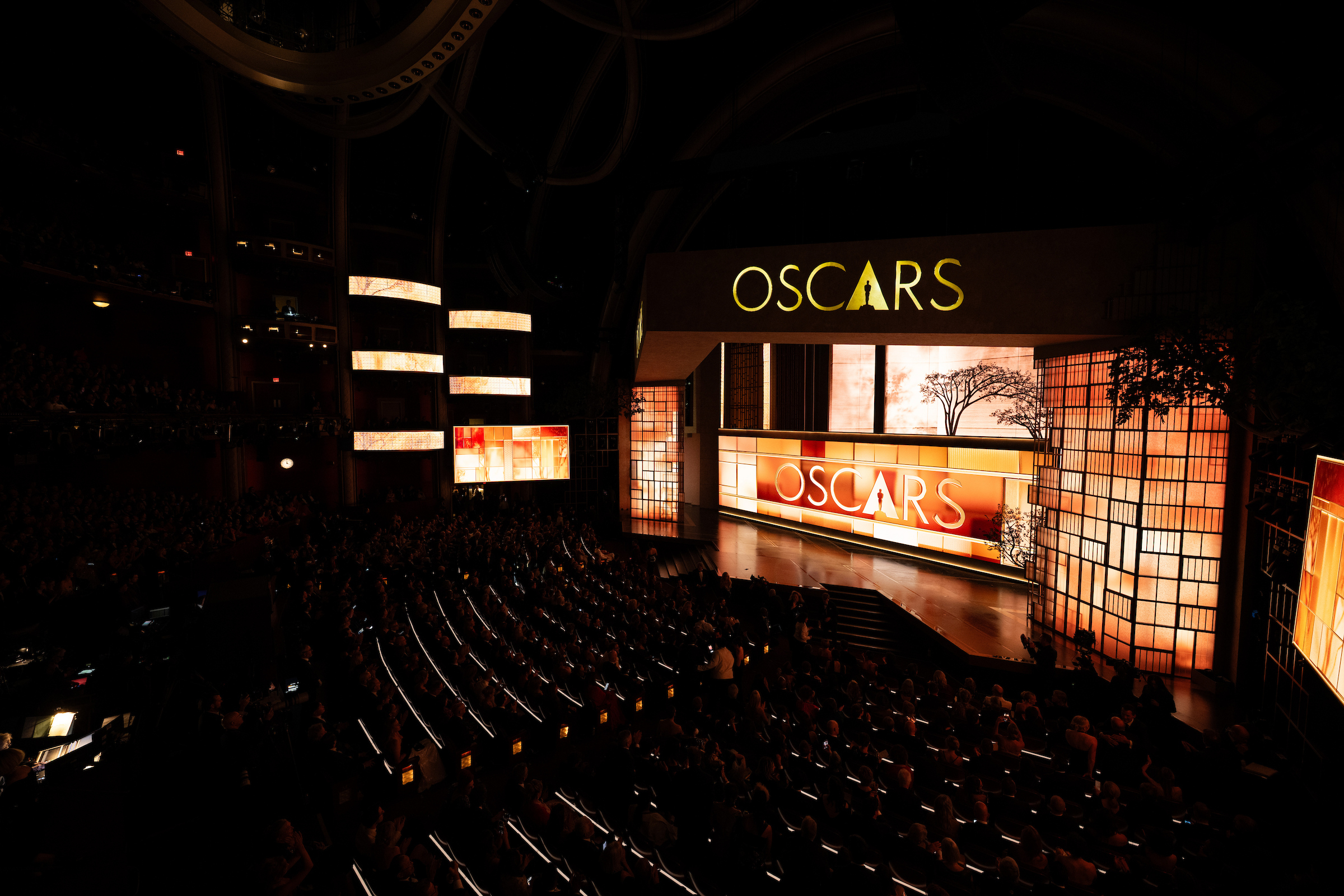
By the time the envelopes were opened Sunday night, many of the craft races had already begun to take shape across the guild circuit.
In the weeks leading up to the Academy Awards, organizations like the American Cinema Editors, Cinema Audio Society, Visual Effects Society and American Society of Cinematographers had begun revealing where momentum was building. When the Oscars finally arrived, several of those signals carried through, while a few key races — most notably cinematography — ultimately broke their own path.
At the center of the night was Paul Thomas Anderson’s One Battle After Another, which emerged as the ceremony’s biggest winner. The film took Best Picture along with Directing, Adapted Screenplay, Film Editing and Casting, giving the film one of the most comprehensive victories of the night.
Editor Andy Jurgensen’s win for Best Film Editing followed his ACE Eddie Award earlier in the week, continuing one of the Academy’s most reliable correlations between the editors’ guild and the Oscar for editing. The film also picked up additional recognition with Sean Penn winning Best Supporting Actor.
But as is often the case, the broader story of the night unfolded across the craft categories, where guild momentum, critics recognition and Academy voting intersected in ways that have increasingly defined modern awards season.
Sound Completes a Strong Guild Run
The Best Sound award went to F1, continuing a strong run for the film across the sound community. The team of Gareth John, Al Nelson, Gwendolyn Yates Whittle, Gary A. Rizzo and Juan Peralta had already been recognized by the Cinema Audio Society earlier in the season, whose mixing award has historically been one of the strongest indicators in the category.
The Motion Picture Sound Editors took a slightly different path in their Golden Reel honors, but F1’s overall strength across the awards circuit ultimately carried through with the Academy.
Cinematography Delivers a Historic Moment
One of the night’s most closely watched races came in cinematography, where Autumn Durald Arkapaw won for Sinners, becoming the first woman ever to receive the Oscar in the category.
The season had seen momentum split between several contenders. Michael Bauman’s work on One Battle After Another won both the ASC Award and the BAFTA, two of the race’s most closely watched precursors. Durald Arkapaw’s sweeping visuals for Sinners, however, had built strong support across critics groups and ultimately resonated with Academy voters.
The win marks a historic moment for the branch and one of the evening’s most notable craft achievements.
Frankenstein Dominates the Design Categories
Guillermo del Toro’s Frankenstein proved particularly strong in the Academy’s design branches, winning Oscars for Production Design, Costume Design and Makeup and Hairstyling.
Production designer Tamara Deverell and set decorator Shane Vieau created the film’s richly textured gothic environments, while Kate Hawley’s elaborate costumes and the makeup team’s transformative creature work helped define the film’s visual identity.
Together, the three wins gave the film one of the most cohesive craft showings of the evening.
Visual Effects and Animation Continue Their Momentum
In visual effects, Avatar: Fire and Ash extended the franchise’s long history of recognition in the category. The team of Joe Letteri, Richard Baneham, Eric Saindon and Daniel Barrett won the Oscar after the film had already been recognized by the Visual Effects Society earlier in the season.
Animation delivered another expected outcome. KPop Demon Hunters won Best Animated Feature after a strong run through the Annie Awards and other industry honors. The film also took home Best Original Song for “Golden,” further underscoring the film’s creative reach across multiple branches of the Academy.
Looking across the results, the broader pattern of the season remained clear. Guild awards once again offered one of the most reliable previews of where the Oscars might land in the craft races.
Honors from organizations like the American Cinema Editors, American Society of Cinematographers, Cinema Audio Society, and Visual Effects Society helped establish the momentum that carried through much of the ceremony.
At the same time, a few races — particularly cinematography — demonstrated that the Academy can still chart its own course when the season’s signals diverge.
With the envelopes now opened, the 2026 awards season comes to a close much the way it unfolded: shaped by the artists behind the camera and the crafts that bring a film to life.
2026 Academy Awards Winners
Best Picture
One Battle After Another
Directing
Paul Thomas Anderson — One Battle After Another
Actor in a Leading Role
Michael B. Jordan — Sinners
Actress in a Leading Role
Jessie Buckley — Hamnet
Actor in a Supporting Role
Sean Penn — One Battle After Another
Actress in a Supporting Role
Amy Madigan — Weapons
Cinematography
Autumn Durald Arkapaw — Sinners
Film Editing
Andy Jurgensen — One Battle After Another
Sound
F1 — Gareth John, Al Nelson, Gwendolyn Yates Whittle, Gary A. Rizzo and Juan Peralta
Production Design
Frankenstein — Production Design: Tamara Deverell; Set Decoration: Shane Vieau
Costume Design
Kate Hawley — Frankenstein
Makeup and Hairstyling
Mike Hill, Jordan Samuel and Cliona Furey — Frankenstein
Visual Effects
Avatar: Fire and Ash — Joe Letteri, Richard Baneham, Eric Saindon and Daniel Barrett
Animated Feature Film
KPop Demon Hunters
International Feature Film
Sentimental Value (Norway)
Documentary Feature Film
Mr. Nobody Against Putin
Original Screenplay
Ryan Coogler — Sinners
Adapted Screenplay
Paul Thomas Anderson — One Battle After Another
Original Score
Ludwig Göransson — Sinners
Original Song
“Golden” — KPop Demon Hunters
Casting
Cassandra Kulukundis — One Battle After Another

