
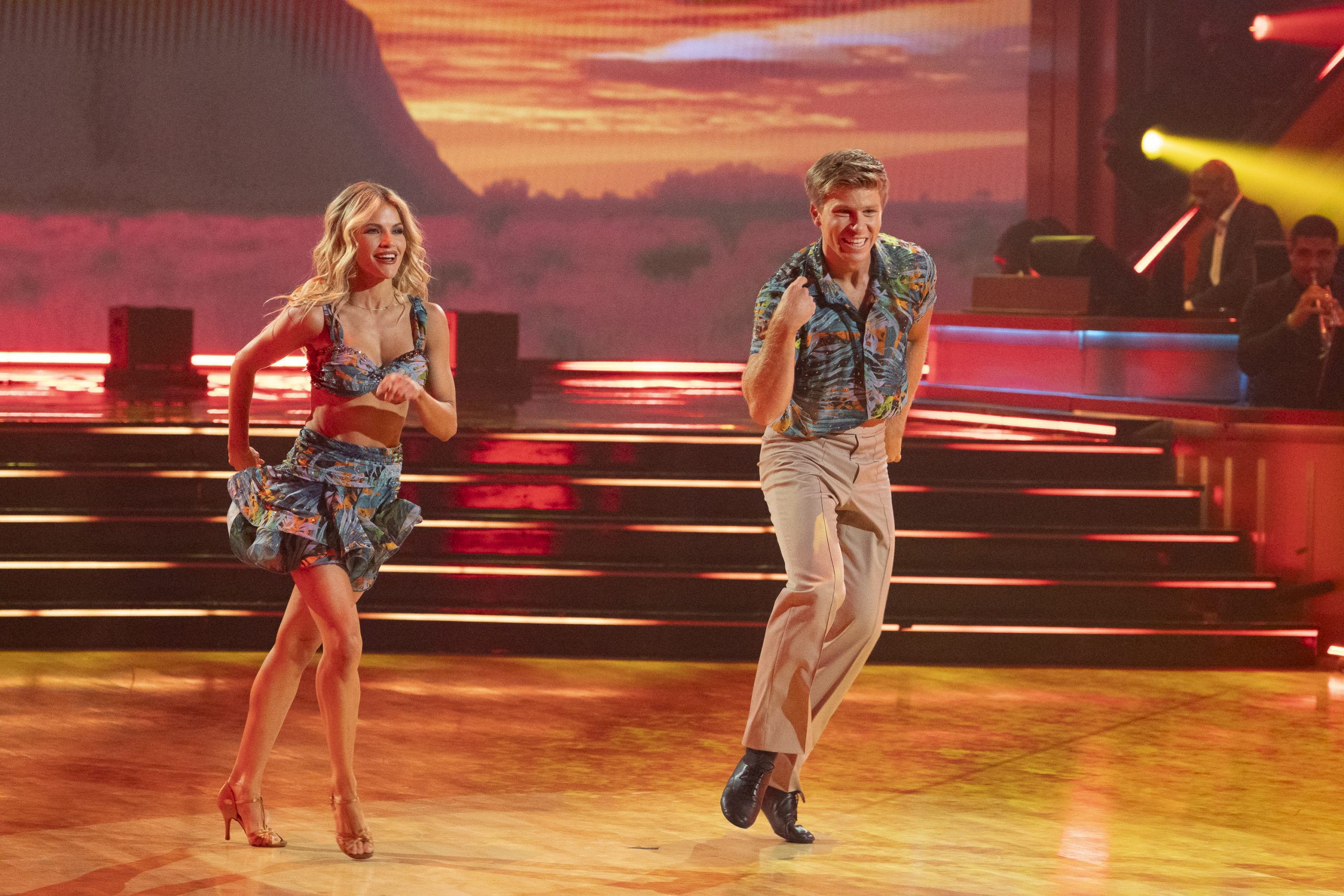
On Dancing with the Stars, the glitter, the lifts, and the live nerves are only half the dance. The rest is being performed by people viewers never see (unless you’re a super fan who watches the behind-the-scenes live feed): the camera operators. Every week, under the direction of Phil Heyes, they execute unseen routines as carefully choreographed as the paso doble or Viennese waltz you see on screen. The performers get sequins. The crew gets headsets and heavy rigs. But together, they sell the show.
Blocking the Lens
The process starts long before the live broadcast. Each number goes through a full camera-blocking rehearsal the day before, where dancers and operators rehearse together to find marks, test props, and avoid collisions. Check out any one of the pros’ TikToks, and you’ll get a glimpse of this process. With as many as 18 cameras circling the ballroom, it’s not just choreography on the floor; it’s choreography around the floor.
Pro dancer Witney Carson once described camera blocking as essential: “It ensures that … props and arrangements we use during the performance are exactly where they need to be for the many different camera angles.” Translation: without the operators, the story the dancers are telling wouldn’t actually land at home.
Dancing Along
The operators are not passive observers. They’re shadow performers, tracing arcs that mirror the energy of the number. In Season 34’s premiere, the credited team included Bert Atkinson, Jonas Brueling, Mike Carr, Kary D’Alessandro, Sean Flannery, Bruce Green, Nat Havolm, Ed Horton, Bettina Levesque, Adam Margolis, Rob Palmer, Brian Reason, Jofre Rosero, Daniel Schade, Daryl Studebaker, Damien Tuffereau, and Easter Xua. Together, they made sure every spin, dip, and judge reaction read in real time.
It’s a tradition rooted in the work of Steadicam legend Hector Ramirez, who once said he thought of himself as “dancing along with the contestants.” That philosophy still guides the show. The Steadicam operators on DWTS glide within feet of the performers, syncing to rhythm and hitting emotional beats like partners on the floor.
Live Pressure, Cinematic Results
Because the show airs live, there are no retakes. Operators are listening for musical cues, reacting to improvisations, and pivoting on a dime when a contestant misses a step or adds a flourish. A single missed cue can flatten the effect of an entire number. While it certainly didn’t take away from the virality of Robert Irwin’s first dance in this season’s premiere, other views of the routine from fans in the audience show that the televised pro shot may have missed some pretty fancy footwork from Irwin. That’s why the blocking rehearsals feel more like military drills — precise, repeatable, and designed to prevent chaos or missed moments.
The payoff is that DWTS often feels more cinematic than its reality-TV peers. Wide sweeps give grandeur, foot-level tracking shots prove technique, and judge or audience reaction cutaways land so effectively. It’s live storytelling, executed at the speed of a jive.
What makes DWTS work in the living room isn’t just star power or glitter. It’s the invisible ballet happening behind the camera. The operators decide when a routine feels intimate, when it feels epic, and when it tilts into high camp. They are, in every sense, the show’s hidden dance partners.
So while the spotlight might stay fixed on the ballroom floor, the operators circling it are performing too. They just happen to be telling the story from the other side of the lens.


