
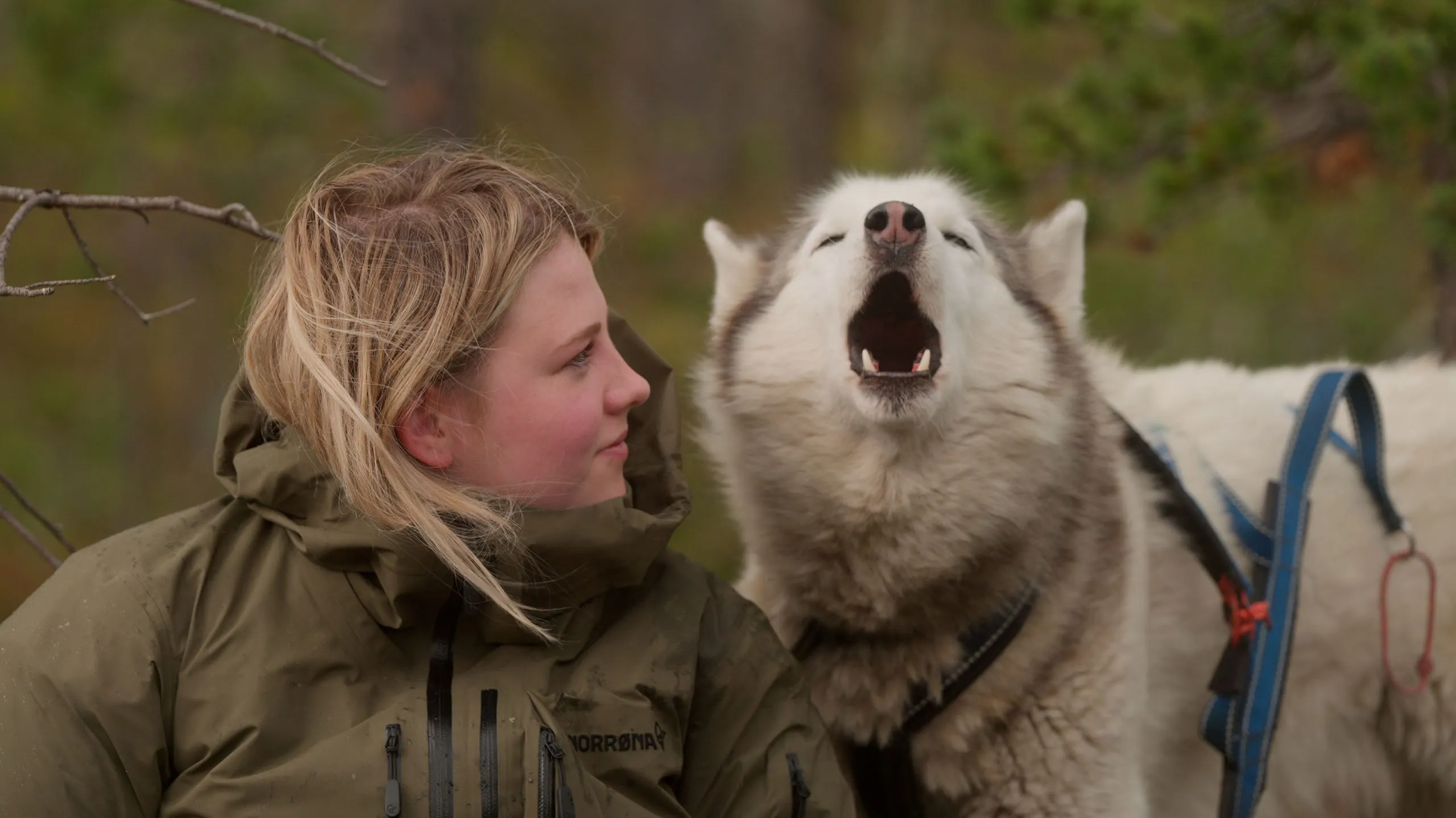
Folktales, directed by Rachel Grady and Heidi Ewing, is a documentary that resists being impressed by its own surroundings. Set at a Norwegian folk high school where teenagers spend an academic year immersed in nature, animals, and isolation, the film never leans on spectacle to make its point. Snow falls without flourish. Mountains loom without announcement. What emerges instead is a patient visual language shaped by proximity, restraint, and a deep respect for lived experience.
That approach comes from cinematographer Lars Erlend Tubaas Øymo, whose ASC Award-nominated work with Tor Edvin Eliassen grounds the film in observation rather than interpretation. His images do not explain the students’ transformations. They give those changes room to happen.
Finding the Film Through Place
Øymo came onto Folktales early, as Grady and Ewing searched for a Norwegian cinematographer with experience working in Arctic conditions and a sensitivity to observational filmmaking. “They were looking for a Norwegian DP with experience shooting in arctic climate, someone comfortable with shooting nature, with a sensitivity towards cinema vérité,” Øymo says in an interview with People of Post. His name surfaced quickly, and an early digital meeting confirmed the fit. “We had our digital meet and greet and hit it off immediately. They had an infectious energy, and we really matched in curiousness and playfulness towards the filmmaking process.”
The directors were also familiar with Øymo’s previous documentary feature Songs of Earth, which unfolds amid the epic landscapes of Norway’s west coast. That film’s relationship to nature and its echoes of German Romanticism became an early reference point. “Surrounded by nature like this, every motif is somewhat related to the visuality and concept of German romanticism,” Øymo says. For Folktales, however, the goal was not grandeur. Grady and Ewing wanted something rawer and closer to the emotional volatility of adolescence. “They wanted the visual style more attuned to the rawness of teenage emotions and unpredictability of their nature.”
That shift reframed how Øymo thought about the environment. Nature was no longer the subject. It became a force acting on the students, shaping them quietly and persistently. “After spending a couple of weeks at the school, the relationship between the students and the animals became our gateway,” he says. “The primordial and mysterious forces that nature inhabits, and how it guides us, became more interesting than the actual landscapes themselves.”
Distance as Intimacy
One of the defining visual choices in Folktales is its consistent use of long lenses. Nearly the entire film was shot this way, often using a 200–600mm lens on a tripod. The decision was as much ethical as aesthetic. “We needed intimacy while at the same time respecting their [the students’] space and privacy,” Øymo explains. Long lenses allowed the crew to stay physically removed while still capturing emotional proximity.
The approach also helped shape subjectivity. Compressing space and isolating figures within the frame emphasized the students’ internal experiences rather than their surroundings. Moments of quiet struggle or reflection register clearly, even when the camera is observing from afar. The distance never feels voyeuristic. It feels considered.
That consistency became even more important as the shoot stretched across an entire academic year. Light shifted dramatically, seasons turned, and weather conditions remained unpredictable. Rather than fighting those changes, Øymo let them inform the film. Cinema vérité, especially in extreme conditions, demands adaptability. “Shooting cinema vérité in such unpredictable and extreme conditions can be time consuming and exhausting,” he says. “But working together with a great team helps you through all of these challenges.”
The addition of a second cinematographer, Tor Edvin Eliassen, early in the process proved crucial. His presence made it possible to follow multiple students simultaneously and maintain continuity across scenes. “He brought with him his own sensibility and creativity as a cinematographer that complemented and added to the visual style of the film,” Øymo notes. The collaboration helped keep the visual language cohesive even as circumstances constantly shifted.
Letting Uncertainty Lead
What distinguishes Folktales from more polished nature documentaries is its refusal to aestheticize everything it touches. There are moments when the landscape could easily overwhelm the frame, but the camera resists that impulse. Beauty is present, but it is never decorative.
That restraint becomes especially apparent during the solo night experience, a pivotal rite of passage for the students. Filming those moments required a careful balance between observation and respect. Øymo stayed present without intruding, letting the environment do much of the work. One of the film’s most resonant motifs emerged by chance during this sequence: a solitary tree discovered in the wilderness. “We became obsessed with it,” Øymo says. “It inspired the entire mythical layer of the film.”
That same openness led to one of his favorite images in the film. “Ultimately my favourite shot in the film; the dog in the red light looking up towards the light.” It is a moment that feels symbolic without being forced, born from attention rather than intention.
The unpredictability of the shoot became part of the film’s identity. “The uncertainties and unpredictabilities are very important for the visual language of the film,” Øymo says. Rather than smoothing those elements away, Folktales allows them to remain visible. The film’s quiet sense of magical realism grows out of lived experience, not design.
A Year That Changes You
What Folktales ultimately captures is not just a place or a program, but a year that genuinely alters the people who pass through it. “For many it is a year that could have real existential impact,” Øymo says. “You grow a lot as a human being while meeting all sorts of different people being exposed to all sorts of challenges.” Spending an entire academic year with the students gave the filmmakers a rare vantage point, one rooted in shared experience rather than observation alone.
That immersion extended beyond the classroom. Hiking, dog sledding, and daily life at the school allowed the crew to understand the philosophy behind the institution, not just document it. The long-term commitment shaped the film’s tone and its trust in small moments.
“As the students are constantly faced with challenges and new experiences, so were we,” Øymo says. “We tried to embrace all the technical challenges that presented themselves.” In Arctic conditions, with limited light, long days, and constantly shifting weather, those challenges became part of the film’s texture rather than obstacles to overcome.
In the end, Folktales finds its balance between the natural and the mythic, between observation and emotion. Nature is not a backdrop, and the students are never reduced to symbols. Instead, the camera listens. It waits. And over the course of a year, it allows transformation to register, one quiet frame at a time.


