
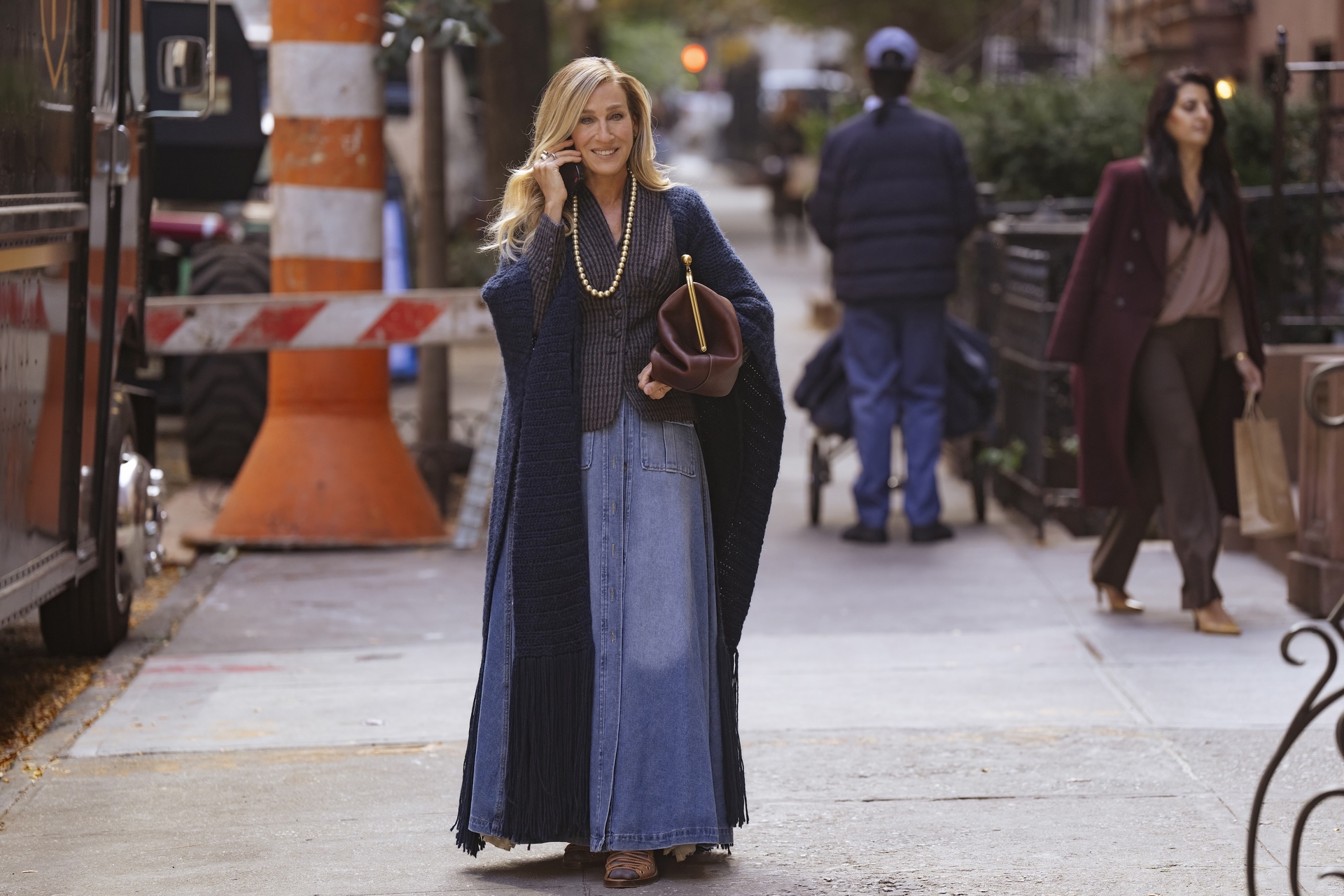
The editing of Sex and the City didn’t just stitch together episodes; it set the pulse of New York in the late ’90s and early 2000s. Snappy cuts, sly reaction shots, and the perfectly timed linger on a smirk or a Manolo turned the series into something more than a weekly half-hour. It was a rhythm that could carry an episode from brunch table banter to gut-punch revelation without losing the audience’s grip on the characters. As And Just Like That wraps its run, it’s worth looking back at how the original series’ editorial decisions built a foundation sturdy enough to carry a sequel two decades later—and why those choices made so many viewers fall in love with the city all over again.
Michael Berenbaum, A.C.E., was one of the main architects of that rhythm. Already an editor with a strong film pedigree on titles like Before Night Falls and Barton Fink, he brought cinematic pacing to the series while embracing the quick-cut instincts of premium cable. Working on Avid Media Composer, he balanced narrative clarity with the rush of New York energy—often juggling episodes from Sex and the City alongside other series in the same day, as he told TV Technology. His work on the pilot earned him an American Cinema Editors Eddie Award in 2002 and an Emmy nomination. Wendey Stanzler, another key cutter, won her own Eddie for the show in 2004 and earned Emmy nods in 2003 and 2004. Known for Roger & Me earlier in her career, she brought a documentarian’s precision to comedy and a deft touch with moments of vulnerability.
Together, they shaped a tone that could turn on a dime. An episode like “Luck Be an Old Lady” shows just how finely tuned that balance was. The structure never overplays the glamour or the chaos; instead, it trusts quick pivots between intimacy and spectacle. One beat might hold long enough for a micro-expression to land, the next might cut sharply to keep dialogue popping. Watching it now, the pacing feels neither trapped in its era nor in a rush to modernize—proof of an editorial style that understood timelessness was more valuable than trend-chasing. That steadiness made the city itself a character, one whose quirks and contradictions were always in step with the women at the story’s center.
Berenbaum’s approach, as he recalled in a Post Magazine feature about the 2008 theatrical release, was built on familiarity: “We had the first read-through … and it was completely déjà vu for everyone.” That continuity in process allowed the film and later And Just Like That to retain a similar editorial heartbeat. Stanzler’s episodes often played with parallel storylines, letting cuts between characters sharpen the thematic through-lines. Their combined work gave the show an elasticity; it could stretch to accommodate high-gloss fantasy without losing its emotional thread.
For all its high fashion and cosmopolitan gloss, Sex and the City had a way of making New York feel personal. The editors captured the city’s rhythms in a way that made viewers believe they could walk straight into a brunch scene or hailing a cab on Fifth. The skyline wasn’t just a backdrop—it was part of the emotional language. And for many who watched during its original run, those cuts were an invitation to imagine themselves in that story, in that city.
The endurance of Sex and the City owes much to the cutting rooms that understood how to make glamour move. The editors didn’t just frame Carrie’s world—they set it spinning at exactly the right speed. As And Just Like That fades to black, it’s the pacing, the precision, and the quiet discipline of those choices that still hold the frame, carrying with them a little of the magic that once made New York the most exciting city on television. We’ll miss Carrie’s world and thank all those who made Sex and the City and And Just Like That such a pivotal series for so many.


