
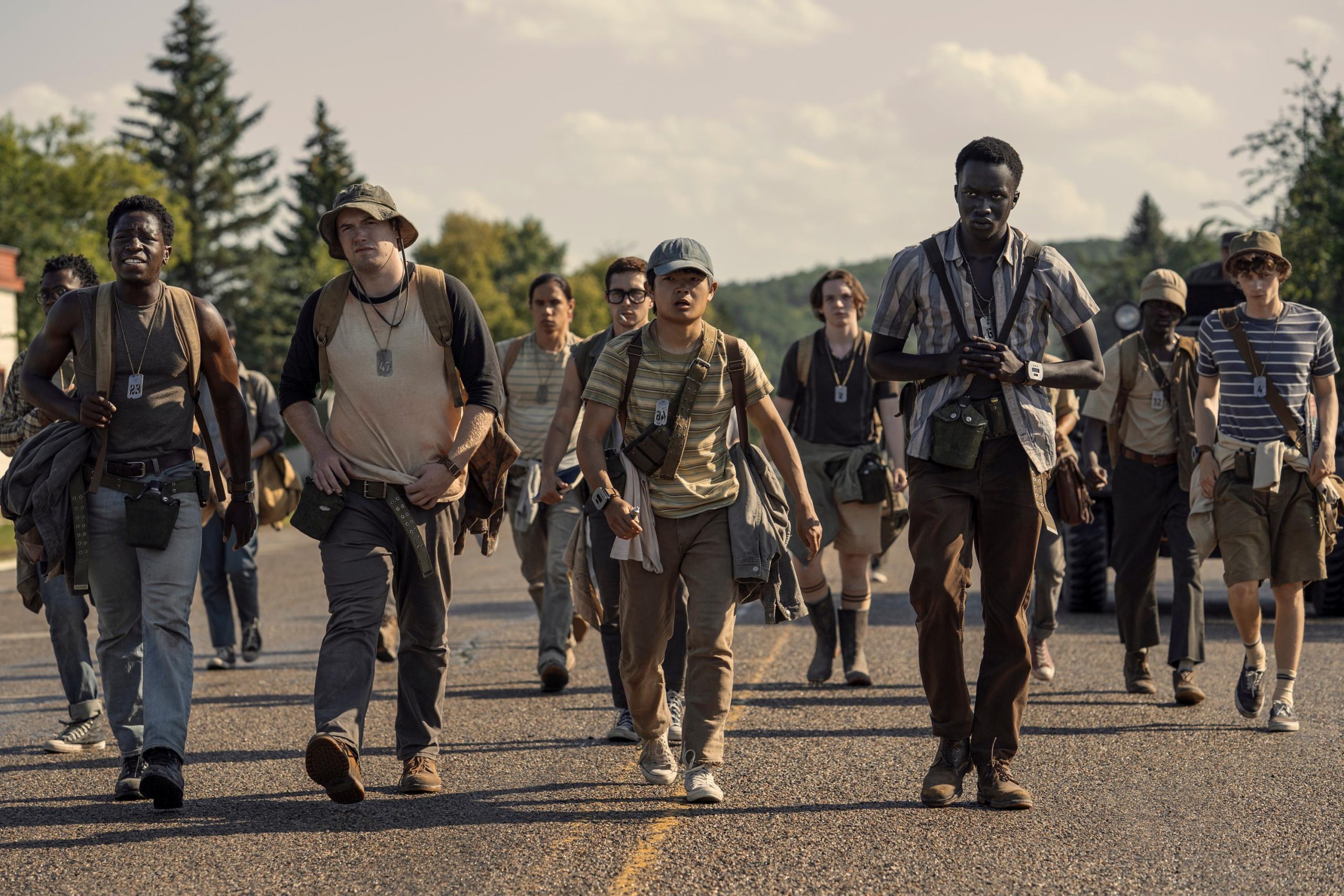
In The Long Walk, editors Peggy Eghbalian and Mark Yoshikawa take what could be a punishing survival horror premise and fashion it into something both visceral and meditative. Their work keeps the narrative breathing, letting fatigue and dread accumulate in long stretches, yet allows bursts of tension to hit hard. The craft lies not in spectacle but in rhythm—walking, waiting, breathing, silence, footsteps. It’s in those spaces that the film’s emotional core takes shape.
The story demands endurance from its characters, and from its cut. Reviewers frequently praise how The Long Walk doesn’t rush the walk-itself. The editing gives space: when characters falter, when they collapse, when they look around in pain or dread, the cut holds. These are quiet moments, and Eghbalian and Yoshikawa trust the audience to live in them. Critics also note how pacing balances monotony and urgency. The walk becomes both ritual and threat. Reviewers often single out scenes where the silence becomes loud—the creak of shoes, the tightening breath, the emptiness of long roads—sound design working closely with editing to unspool dread without overt cues.
There are jolts too—when someone drops out, or when danger comes suddenly. That moment of rupture is sharpened by the cut. It’s not just what comes after that shock but what the film refuses to cut away from beforehand. The tension builds because the moments of “before danger” are given weight. The editing often doesn’t lean on quick cuts; instead it lets ambient noise swell, allows visual discomfort to settle.
Editing in Collaboration
Mark Yoshikawa brings decades of experience to the project. His background—editing large, ambitious films that blend narrative, landscape, and internal states—prepares him well for The Long Walk. He has spoken in past interviews of the value of establishing rhythm early, of letting cuts breathe so that when something dramatic happens, it hits more sharply. While I didn’t locate a published quote from Yoshikawa about The Long Walk specifically, that philosophy appears resonant in what audiences and reviewers point out. Peggy Eghbalian, whose credits include projects demanding both clarity and tension, provides an editorial counterpoint that keeps the film grounded.
Cinematography by Jo Willems lays the field: wide frames showing horizon, trees, road; light shifting over miles of landscape. Eghbalian and Yoshikawa use those visuals, letting space and distance work as emotional force. They don’t overcrowd with cross-cut urgency but allow scenes to stretch. And the sound design supports: footsteps, wind, ragged breathing, near silence, all punctuated when the walk’s rules slip.
What makes their editing work stand out is restraint paired with precision. The Long Walk could easily fall into melodrama or horror-show clichés. Instead it builds dread through pace: the long walk becomes metaphor for survival, for loss, for the body breaking down. Reviewers say the film’s power is cumulative, that its editing allows the audience to wear the exhaustion of its characters. The sequences that draw attention are often those where the cut doesn’t distract, where the visual line is clean, where sound doesn’t swell but sharpens. The canvas is bleak; the craft is gentle but firm.
Mark Yoshikawa, ACE, cut large scale films before this one, working with directors who emphasize ambience and epoch as much as plot. In an earlier interview he said, “The main thing to cutting a big visual film is to leave breathing room for the viewer to see the world you’ve built.” Eghbalian’s previous work likewise tends toward character-centered tension, editing scenes where silence is as loaded as dialogue.
With The Long Walk, they bring both of those sensibilities to the fore. The film doesn’t let its landscapes or its horror dominate; rather it insists that character, suffering, and endurance also dominate. It’s a credit to them that the movie feels like a journey—not just in miles, but in psychological terms.
Here’s what emerges: The Long Walk works because its editors understand that tension is built in what is allowed to linger. Eghbalian and Yoshikawa use pauses, ambient sound, and the stretch of walking to shape dread. When horror or emotional collapse comes, it lands because the build-up has been patient. It’s a film you feel in your bones. Cinematography gives you wide horizon but editing gives you the steps; sound gives you wind and breathing. The craft isn’t flashy. It’s essential.


