
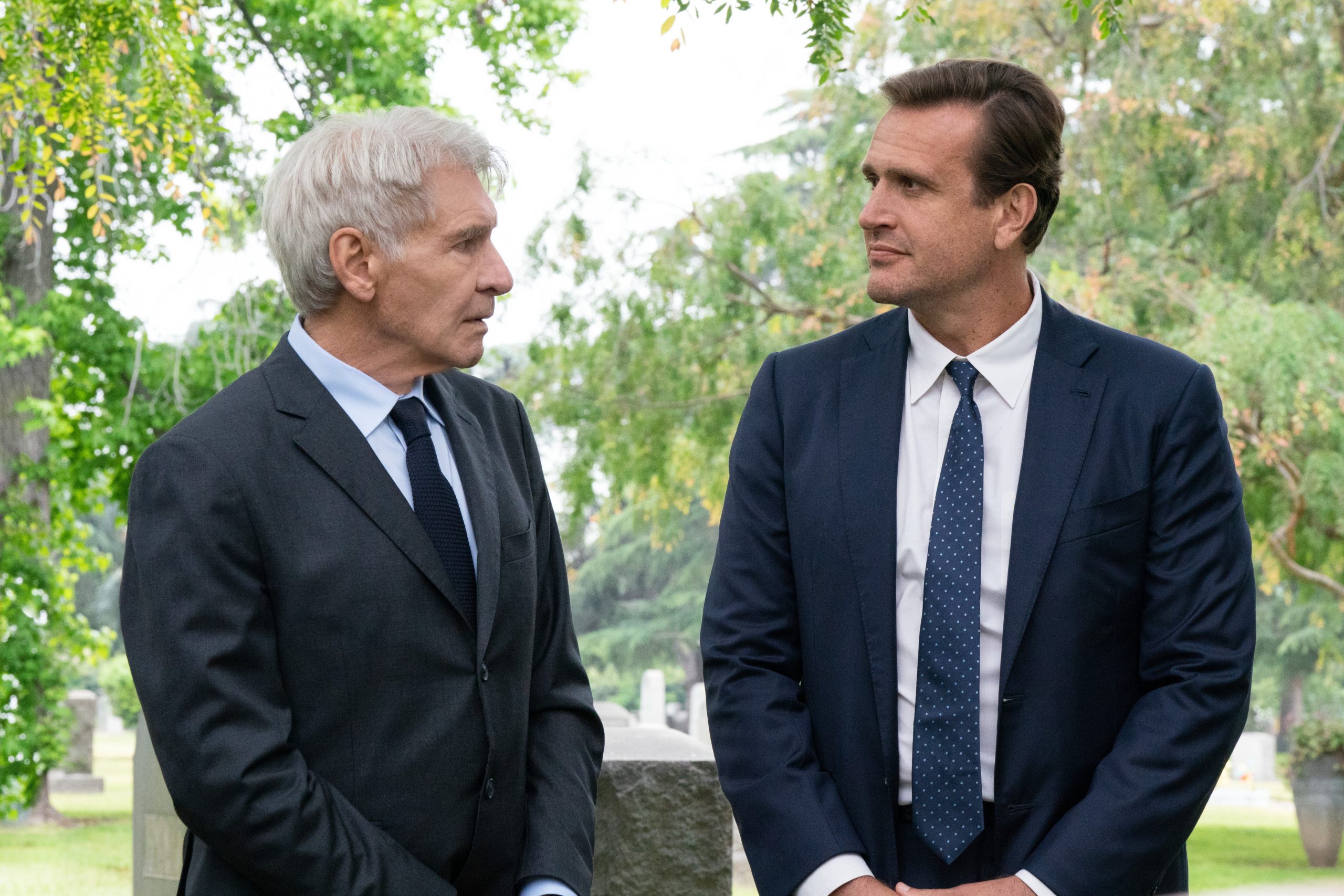
Bill Lawrence, Brett Goldstein, and Jason Segel’s Shrinking isn’t a broad comedy. It’s a show about grief, midlife chaos, and the stubborn hope that laughter and connection can coexist with pain. What makes it land tonally is not just the writing or the performances but the look of the series. Through the color grade, Corinne Bogdanowicz (season one) and Mark Wilkins (season two) have created a palette that allows the show to remain funny without trivializing sorrow, and warm without ever becoming syrupy. This balance, in part, is what makes the show so well-received, including Emmy nominations for Outstanding Comedy for two consecutive years.
Establishing the Tone: Season One with Corinne Bogdanowicz
In its debut season, Shrinking had to walk a tonal tightrope: a therapist (Jason Segel) coping with his wife’s death, a daughter trying to rebuild trust, and a circle of colleagues and patients who stumble into absurdity. Bogdanowicz’s grade created a visual world where all of that could sit side by side. Interiors are bathed in natural light that feels inviting yet not overly polished. Segel’s home, often the site of tension with his daughter, has a golden softness that keeps even the most heated arguments from feeling harsh. Therapy offices, meanwhile, are neutral and balanced, spaces where comedy can land without sacrificing gravity.
The strategy is subtle but essential. The first season’s story lives in contrasts with sharp jokes about inappropriate boundaries in sessions, cut against moments of real emotional rawness. Bogdanowicz’s color ensures those contrasts don’t feel jarring. The palette bridges the shifts so that laughter and pain share the same air.
Refinement and Continuity: Season Two with Mark Wilkins
By the second season, the show’s themes widen: relationships deepen, grief evolves into something less raw but still tender, and the comedy gets looser. Mark Wilkins’ grading carries forward Bogdanowicz’s established palette but sharpens it slightly. Daylight scenes often feel a touch clearer, with contrast that underscores the characters’ gradual movement toward stability.
Group therapy sequences in season two, for example, are visually consistent. A wood-paneled room that never distracts, always grounding the ensemble while letting the dynamics play out. Wilkins’ touch keeps the neutrality but adds enough definition to highlight shifting tones in the performances. Where season one sometimes softened the edges of grief, season two allows a bit more crispness, reflecting a story that’s less about surviving loss and more about stumbling into the future.
How Color Shapes Character and Theme
The genius of the grade is that it works invisibly to mirror the show’s themes. Shrinking is about people learning to sit with discomfort. The color doesn’t attempt to smooth it all away. Instead, it creates a base layer of warmth, reminding us this is, after all, a comedy, while leaving enough natural contrast to let grief and conflict show through.
When Jimmy (Segel) argues with his daughter in their kitchen, the warmth of the grade tempers the sting, so the scene reads as both heartbreaking and funny. When Harrison Ford’s character steals moments of dry humor in his sunlit office, the neutral tones let the performance breathe without pushing it toward sentimentality. Even outdoor scenes in suburban Pasadena feel authentic rather than heightened.
Why It Plays
Shrinking thrives on tonal pivots: one moment a sharp gag, the next a moment of genuine vulnerability. Bogdanowicz and Wilkins make those pivots possible. The color never dictates emotion, but it clears the path so that both humor and hurt land cleanly.
That’s why the show feels different from most streaming comedies. It doesn’t announce itself with a flashy look. Instead, its palette matches the story’s themes: grief doesn’t erase light, humor doesn’t erase depth. In the hands of these colorists, the series looks exactly the way it feels—funny, fragile, and ultimately human.
Editor’s Note: This profile was compiled using publicly available interviews and press materials. All quotes are attributed to their original sources. No new interviews were conducted for this piece.


