Germain McMicking and the Gorgeous Grotesque of Together
In a festival season that was thick with elevated horror, Michael Shanks’s Together stood out for the way it married romantic-comedy rhythms to body-horror revulsion. That tonal whiplash lives, and lingers, in the photography of Australian cinematographer Germain McMicking, ACS.
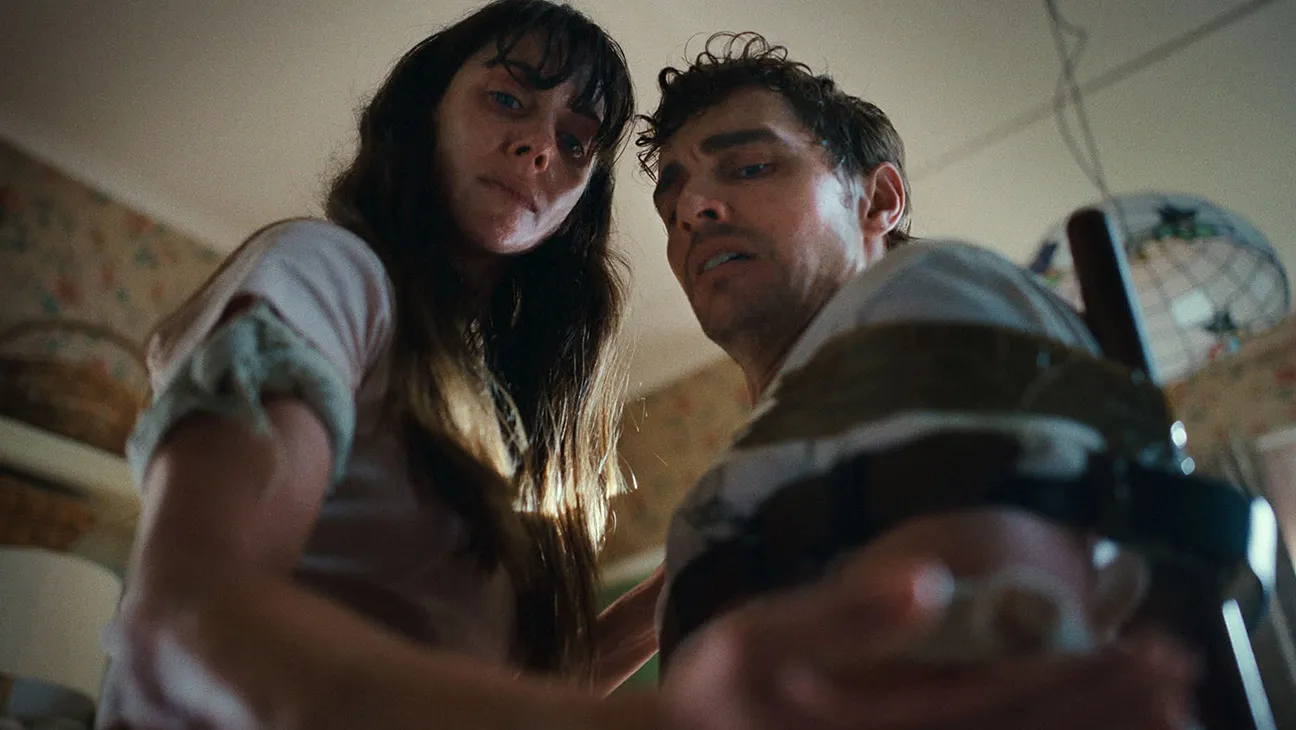
In a festival season that was thick with elevated horror, Michael Shanks’s Together stood out for the way it married romantic-comedy rhythms to body-horror revulsion. That tonal whiplash lives, and lingers, in the photography of Australian cinematographer Germain McMicking, ACS, whose lens choices and lighting schemes turn codependence into a tactile, unsettling spectacle.
A Low-Budget Feature With 8K Ambitions
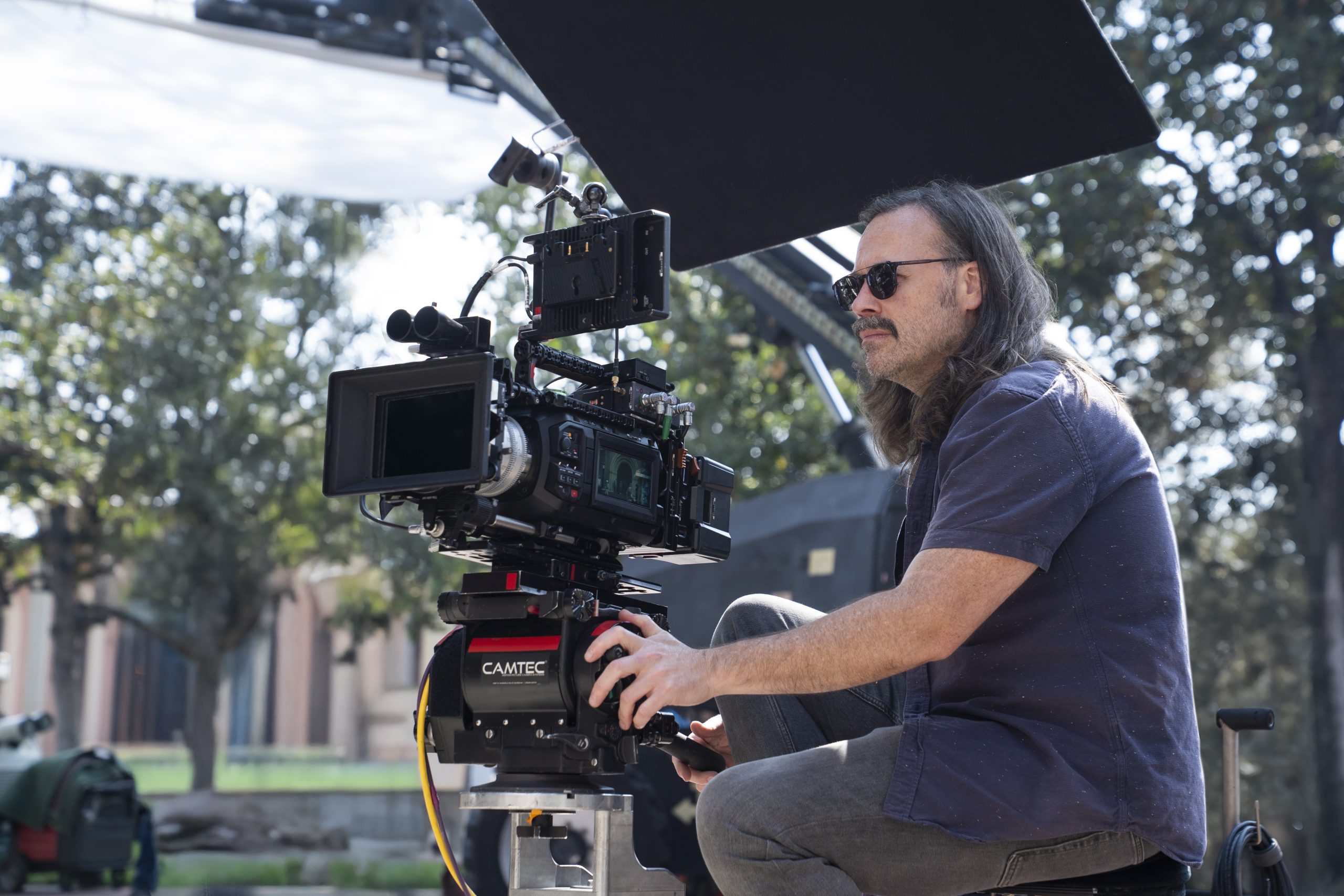
Together was shot in and around Melbourne, Australia, though you’d never know it should be the Pacific Northwest. McMicking scouted the Dandenong Ranges, hunting for pockets of oak and pine that hid tell-tale eucalyptus. With only about twenty shooting days, he needed speed and flexibility, so he built a two-camera Sony VENICE 2 package shooting 8 K. One body stayed in “Studio mode” for handheld and dolly work; the second lived in Rialto configuration, small enough to cram into corners or flatten against the ceiling for claustrophobic coverage.
“The ergonomics of the VENICE 2 in Rialto mode ultimately tipped the scale,” McMicking said in an interview with ICG Magazine, adding that the dual-ISO sensor became a lifesaver during night exteriors lit only by propane torches and an overworked moonbox. The 8 K plates also gave visual-effects supervisor Pete Austen wiggle room for reframes before the final 4 K finish.
McMicking and 1st AC Cam Gaze tested everything from vintage anamorphics to Super-35 knock-abouts, but landed on full-frame Zeiss Supreme Primes. “They felt honest and unfussy,” the DP noted to ICG Magazine, praising their low-light performance and lack of geometric distortion at the wide end—vital when a kitchen argument suddenly pushes the camera inches from peeling skin. The Supreme set’s near-identical size and weight sped up lens swaps, precious seconds on a schedule where prosthetics had to be glued on before the sun vanished behind gum trees.
Color temperature shifts tell the relationship’s story. Early scenes bask in honeyed sunlight and tungsten kitchen practicals. By act three the gels go jaundiced, practicals shrink to slits, and highlights bloom just enough to sting your eyes. It’s romantic comedy lighting left in a damp basement for too long.
Moving Fast, Staying Close
Actor-producers Dave Franco and Alison Brie wanted minimal coverage to keep performances raw, so McMicking shot most scenes single-camera, switching to the Rialto body only when geography pinned him. Handheld Ronin-2 moves and low-angle slider shots let him pivot from affection to disgust without changing rigs. Editor Harry Yoon later described the dailies’ “emotional geography” as paint-by-numbers simple: every insert arrived where the story needed it, not as a patch-up in post.
The result is a ping-pong rhythm where pastel daylight cuddles one minute and sickly green moonlight suffocates the next. When the film’s climactic mutation unfolds—a shoulder-height handheld shot vibrating with nausea that refuses to look away—Company 3 colorist Natasha Leonett tips mid-tones toward queasy greens, while true reds pop so the viscera reads real, not stylized.
McMicking has danced on this tonal knife edge before. Jane Campion’s Top of the Lake (ACS Gold) and HBO’s True Detective Season 3 both asked for beauty threaded with menace. In Together, that thread is a codependent nightmare, so the frame squeezes until we feel the walls too.
Wherever he goes, Together proves McMicking can suture tenderness to revulsion without visible stitches. The film’s final shot—a lovers’ embrace that looks more autopsy than affection—lingers because McMicking’s lens won’t let us look away. Few cinematographers can make horror feel this personal, or heartbreak this grotesque. Directors notice. Audiences feel it in their stomachs.
As a whole, Together feels like a Nora Ephron love story that wandered into a David Cronenberg surgical suite—warm and witty up front, then suddenly surgical and skin-crawling. The rom-com banter draws you in; the body-horror crescendo dares you to keep looking. Thanks to McMicking’s unflinching camera and Shanks’s razor-clean blocking, the movie never dissolves into genre casserole—it remains a single, unsettling flavor that turns sweeter scenes sour in retrospect. If you can stomach a love story that ends with a gag reflex.
Editor’s Note: This profile was compiled using guild production notes, publicly available interviews, and festival press materials. All quotes are attributed to their original sources. No new interviews were conducted for this piece.